
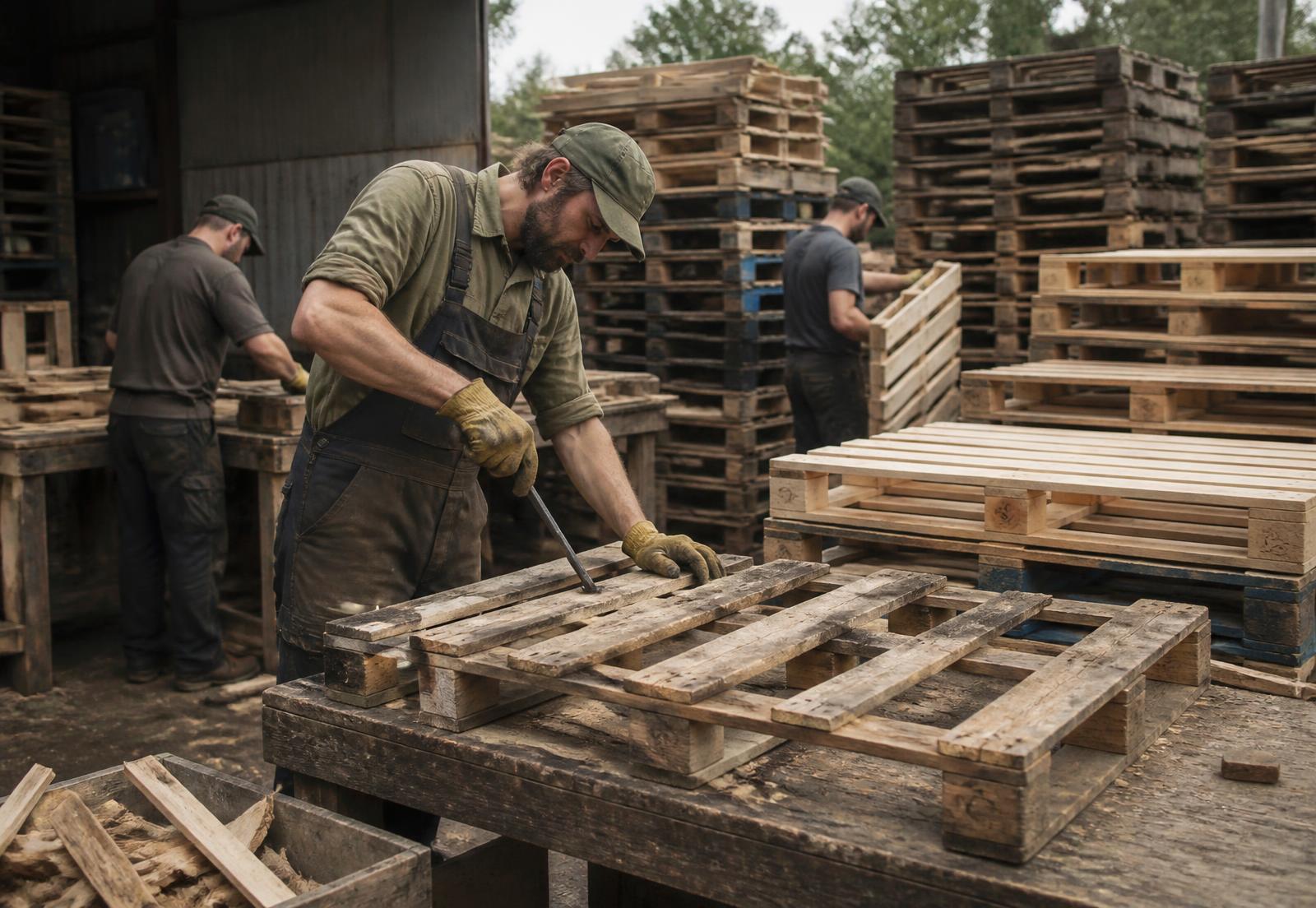
Circular economy
Keep material in circulation for as long as it is useful.
Reuse is the commercial model, not a bolt-on. Recovered assets are graded, repaired and redistributed so material stays in service instead of becoming waste.
Principles
Six operating principles
No carbon claims we cannot evidence, no offset language, no invented percentages. Just the order in which we handle material.
Reuse first
Every recovered asset is assessed for direct reuse before any other route is considered. Reuse preserves the embodied material and energy already in the product.
Repair second
Where condition falls short, repair and reconditioning bring stock back to a usable commercial specification instead of writing it off.
Recycle last
Material genuinely beyond economic repair is routed to recycling. It is the exit from the loop, not the default destination.
Reduce virgin demand
Every reused pallet is a pallet that does not need to be manufactured. Displacing new production is the most direct lever we control.
Fewer movements
Pairing deliveries with collections where routing allows removes duplicate vehicle journeys from the same corridor.
Honest reporting
We publish only what we can evidence. No invented carbon figures, no offset language, no percentages we cannot stand behind.
Evidence
Specific answers, not generic figures
We do not publish carbon numbers or diversion percentages we cannot evidence. Procurement teams needing detail for supplier questionnaires should contact us directly and we will answer specifically about the work we do for you.
For buyers
Reconditioned stock lowers cost per unit and reduces new material demand at the same time.
Buy reconditioned palletsFor sellers
Surplus stock leaves your site as a recovered asset instead of a disposal cost line.
Sell palletsFor programmes
Recurring recovery gives predictable clearance and a reporting line you can evidence.
Recovery programmesNext step
Reuse works better when it is planned.
Talk to us about keeping your pallets and industrial assets in circulation.